When most people hear “blockchain,” they immediately think of Bitcoin or volatile cryptocurrency prices. However, the underlying technology—a decentralized, immutable ledger—represents a far more profound innovation than any single currency. At its simplest, a blockchain is a shared database where data is stored in “blocks” that are cryptographically chained together in chronological order. Unlike a traditional database housed on a single server (like those used by banks or governments), a blockchain is distributed across thousands of independent computers, or nodes. This structural shift eliminates the need for a central authority, replacing human trust with mathematical verification and consensus protocols.
The technological engine that powers this trust is called a consensus mechanism. The most famous example is Proof-of-Work (PoW), used by Bitcoin, where nodes called “miners” compete to solve incredibly complex mathematical puzzles. The first miner to solve the puzzle earns the right to add the next block of transactions and is rewarded with new coins. This process is deliberately energy-intensive because the cost of cheating—rewriting the blockchain—would require controlling more than 51% of the network’s computing power, a feat so expensive and impractical that it acts as a foolproof security system. Newer blockchains, like Ethereum after its “Merge,” use Proof-of-Stake (PoS), where validators lock up their own coins as collateral, drastically reducing energy consumption while maintaining security.
One of the most powerful technological features of blockchain is immutability—the inability to change past records. Once a block is added to the chain and confirmed by subsequent blocks, altering a single piece of data would require recalculating every puzzle for every block that came after it, all while outpacing the entire rest of the network. This creates a permanent, auditable, and transparent history of events. For industries plagued by fraud, data tampering, or record-keeping disputes—such as supply chain logistics, medical records, or land title registries—this feature alone is revolutionary. It turns the ledger from a mutable document into an unbreakable historical archive.
Beyond simple transactions, blockchain technology introduced the world to “smart contracts,” first popularized by Ethereum. A smart contract is a self-executing program stored on the blockchain that runs automatically when predetermined conditions are met. Think of a vending machine: you insert a dollar (the trigger), and the machine mechanically dispenses a soda (the outcome) with no human intervention. Smart contracts extend this logic to complex agreements—insurance payouts, escrow services, royalty distribution for artists, or even decentralized voting systems. Because the code is public and immutable, no party can change the rules after the fact, enabling trustless automation on a global scale.
Scalability has historically been blockchain’s greatest technical Achilles’ heel. Traditional blockchains process transactions sequentially; Bitcoin manages roughly 7 per second, while Visa handles over 24,000. This bottleneck led to the invention of Layer 2 solutions, technologies built on top of existing blockchains. The most successful example is the Lightning Network for Bitcoin, which creates private payment channels between users. Millions of micro-transactions can occur off-chain instantly and with near-zero fees, while only the final net result is recorded on the main blockchain. This layered architecture is akin to moving from a single-lane highway to a network of express lanes, side streets, and skyways.
Another major technological frontier is interoperability—the ability for different blockchains to communicate with one another. Initially, blockchains operated as isolated silos; Bitcoin could not “speak” to Ethereum, and neither could talk to Solana or Polkadot. This fragmentation limited the technology’s utility. Modern solutions like cross-chain bridges and protocols such as Cosmos’s Inter-Blockchain Communication (IBC) enable assets and data to flow between networks. A user can now take Bitcoin, “wrap” it into a token compatible with Ethereum, and use it in a decentralized finance (DeFi) application, all without a centralized exchange acting as intermediary. Interoperability transforms blockchain from a collection of isolated islands into a unified internet of value.
The integration of blockchain with other emerging technologies is creating powerful new use cases. When combined with the Internet of Things (IoT), blockchain can provide a tamper-proof log of sensor data from shipping containers, verifying the cold chain of vaccines or the authenticity of luxury goods. When paired with artificial intelligence (AI), blockchain can be used to timestamp and verify AI-generated content, helping to combat deepfakes and proving whether an image or text was created by a human or a machine. Furthermore, decentralized storage networks like IPFS and Filecoin use blockchain incentives to create a global, censorship-resistant hard drive, breaking the dominance of centralized cloud providers like Amazon and Google.
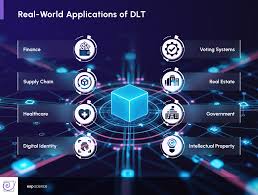
Despite the hype and the crypto market crashes, the core technology continues to mature quietly in the background. Major corporations including IBM, Walmart, and Pfizer are already using private, permissioned blockchains to track food safety and pharmaceuticals, reducing recall times from weeks to seconds. Governments are experimenting with blockchain-based voting and digital identity systems. And developers are building decentralized social networks where users—not corporations—control their own data. The blockchain will not replace all databases, just as the internet did not replace all forms of media. But for applications requiring transparency, permanence, and decentralization, it offers a technical solution that simply did not exist twenty years ago.